

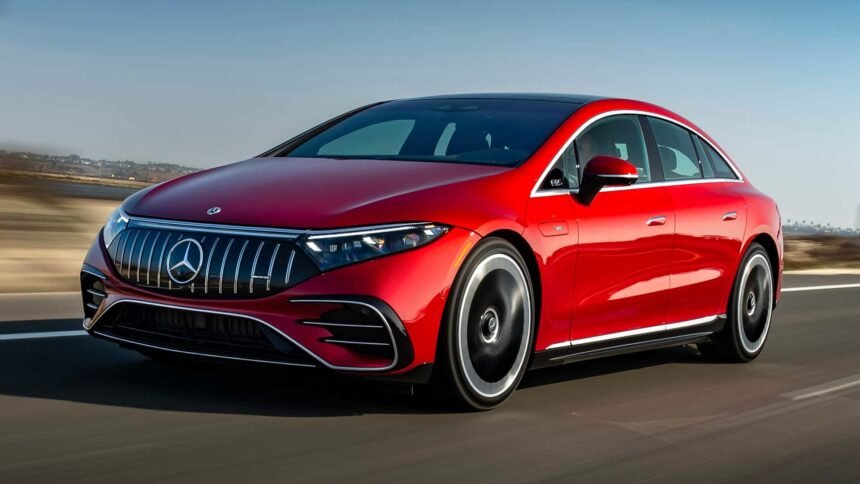
Beauty is indeed subjective, but the overall consensus on the design of Mercedes’ flagship electric car, the EQS, seems to lean towards the negative. Despite the criticism, I personally find the EQS to be quite appealing, especially when seen in person. While it may lack the imposing presence of the S-Class, it was never meant to be a direct replacement for it. Perhaps our expectations have been too high, judging it too harshly for not meeting the traditional luxury sedan standards.
Mercedes’ design chief, Gorden Wagener, has offered insights into why the EQS failed to resonate with buyers. He suggested that the car was launched “10 years too early,” implying that its futuristic design might have been too ahead of its time. However, even after four years on the market, public perception of the EQS has not shifted significantly. The aerodynamically-focused jellybean design has struggled to win over consumers.
Wagener points out that the EQS was not meant to cater to S-Class buyers, as it is a completely different car with its own unique identity. In hindsight, he believes that Mercedes should have marketed the EQS as a futuristic model akin to the CLS or S-Class Coupe, rather than directly comparing it to the traditional flagship sedan.
Acknowledging the shortcomings of the EQS, Mercedes is now working towards unifying the design language across its combustion and electric models. The next-generation S-Class is expected to introduce a zero-emission version that will likely replace the EQS. The current egg-shaped styling is gradually being phased out, with the upcoming facelift of the S-Class in 2026 paving the way for a more cohesive design approach.
Mercedes is following in the footsteps of BMW by integrating various powertrains under a single model family. The new CLA and the upcoming electric GLC are examples of this strategy, with both models sharing a similar design regardless of their power source. The shift towards a unified lineup indicates that Mercedes is moving away from the separate EQ branding and towards a more streamlined approach to its vehicle lineup.
Despite the criticism, Wagener stands by the purposeful and progressive design language of the EQS. He believes that the lukewarm reception of the electric sedan is not solely due to its styling but also reflects the broader customer perception of EVs as compared to traditional combustion cars. Mercedes has made efforts to align the EQS with the S-Class aesthetic by incorporating familiar design elements, such as a front grille reminiscent of the brand’s iconic luxury sedan.
As Mercedes continues to refine its design language and transition towards a more cohesive lineup, it is clear that the EQS will remain a part of the brand’s portfolio for the foreseeable future. The upcoming facelift and integration of signature design elements from other models suggest that Mercedes is committed to improving the EQS and bridging the gap between traditional luxury and futuristic electric vehicles.