

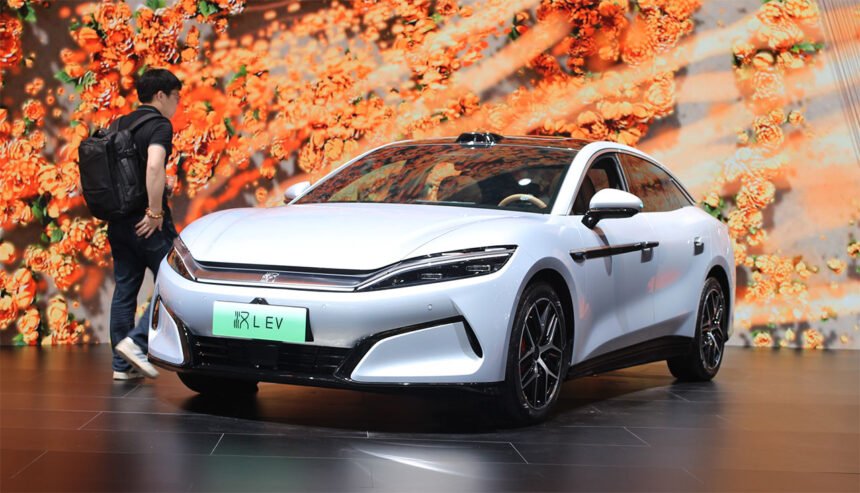
China’s shift towards supporting the electric vehicle (EV) market is evident with the latest move by Beijing to ban the acceptance of new gasoline vehicles on ride-hailing platforms. This policy came into effect on July 20, signaling a clear preference for EVs in the city’s transportation sector.
According to a report by China Automotive News, an affiliate of the People’s Daily, Beijing had previously required gasoline cars with emission standards below National 6 to exit the ride-hailing market. The recent policy takes it a step further by prohibiting new fuel cars from entering the market.
Drivers of gasoline cars in Beijing have reportedly received alerts informing them that their vehicles do not meet the requirements and must be replaced with green-plate vehicles if they wish to continue operating on ride-hailing platforms. This move aligns with the broader trend in China, where cities like Shenzhen, Guangzhou, and Xi’an have already phased out fuel cars from their ride-hailing services.
As more cities across China implement similar bans on gasoline vehicles in the ride-hailing sector, the industry is poised to transition rapidly towards electrification. The growth of China’s new energy vehicle (NEV) industry is a key driving force behind this shift, with NEVs accounting for half of all passenger car sales in the country.
In June alone, retail sales of China’s passenger NEVs reached 1.111 million units, marking a 29.7 percent year-on-year increase and an 8.2 percent rise from the previous month. The penetration of NEVs in the retail market stood at 53.3 percent in June, indicating a growing preference for electric vehicles among consumers.
Automakers are also capitalizing on this trend by focusing on the ride-hailing market. For instance, Changan Automobile recently launched the Oshan 520 electric sedan, equipped with CATL’s battery swap solution. This innovative technology allows owners to save more than 2 hours of charging time per day, making it a convenient option for ride-hailing drivers.
Overall, the ban on gasoline vehicles in Beijing’s ride-hailing market reflects a broader shift towards electrification in China’s transportation sector. With the NEV industry experiencing rapid growth and cities embracing EVs, the future of transportation in China looks increasingly electric.