

Wednesday, 24 Jun 2026
  • Contact
  • Privacy Policy
  • Terms & Conditions
  • DMCA
logo
  • News
  • Brand
    • BYD
    • Nio
    • Xpeng
    • Zeekr
    • Leapmotor
    • Xiaomi
    • Lynk & Co
    • DENZA
    • Wuling
    • GWM
    • ONVO
  • Electric Vehicle
  • Technology
  • Car Reviews
  • Design
  • Manufacturing
  • Tips & Advice
  • 🔥
  • China
  • electric
  • Review
  • Tesla
  • BYD
  • car
  • cars
  • SUV
  • Nio
  • Specs
Font ResizerAa
Ride RadarRide Radar
Search
  • News
  • Brand
    • BYD
    • Nio
    • Xpeng
    • Zeekr
    • Leapmotor
    • Xiaomi
    • Lynk & Co
    • DENZA
    • Wuling
    • GWM
    • ONVO
  • Electric Vehicle
  • Technology
  • Car Reviews
  • Design
  • Manufacturing
  • Tips & Advice
Have an existing account? Sign In
Follow US
© 2024 rideradar.online – All Rights Reserved.
Ride Radar > Blog > Technology > Automotive Memory Chip Industry and Its Impact on Foundation Models 2025
Technology

Automotive Memory Chip Industry and Its Impact on Foundation Models 2025

Last updated: April 29, 2025 1:10 pm
Share
SHARE

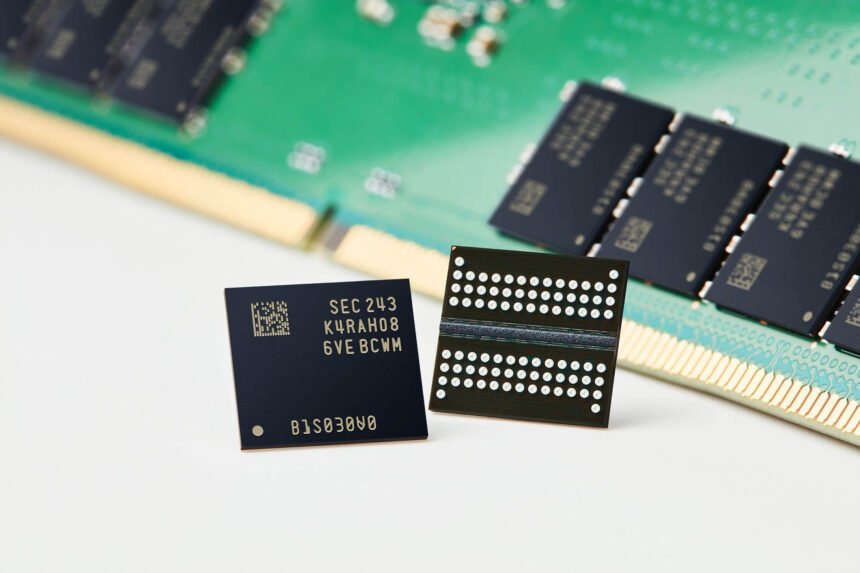
The automotive industry is experiencing a significant shift in memory chip technology, driven by the increasing complexity of foundation models, performance requirements, and cost considerations. According to a report by Research on automotive memory chips, the global market is expected to grow substantially, reaching over USD17 billion by 2030, with a projected CAGR of 22%.

One of the key drivers for the development of automotive memory chips is the rapid advancement of automotive large language models (LLMs). These models have seen a significant increase in the number of parameters, ranging from 7 billion to 200 billion, posing challenges in terms of computing demands. As a result, memory has become a bottleneck in performance, especially for memory-intensive models like GPT.

Companies like XPeng are pushing the boundaries with ultra-large autonomous driving models, such as the XPeng World Foundation Model with 72 billion parameters. To address the growing parameter scale, XPeng has developed the Turing AI chip, which boasts higher utilization compared to traditional automotive chips and can handle models with up to 30 billion parameters.

The choice of memory technology plays a crucial role in overcoming performance bottlenecks. LPDDR5X is widely adopted but falls short in meeting the demands of large models. Companies are exploring alternatives like GDDR6 and HBM2E for higher bandwidth and efficiency. Additionally, advancements in memory technology like LPW DRAM offer improved performance and reduced power consumption.

In terms of storage solutions, UFS 4.0 and PCIe SSD are becoming preferred choices for high-level autonomous vehicles. These technologies offer higher speeds, lower latency, and improved AI computing capabilities. Companies like Samsung and Micron are already offering automotive-grade SSD solutions to meet the evolving needs of the automotive industry.

See also  Xpeng to start using in-house developed autonomous driving chip in its EVs in Q2, report says

In conclusion, the automotive memory chip landscape is evolving rapidly to meet the demands of increasingly complex foundation models and performance requirements. Companies are exploring advanced memory and storage technologies to overcome bottlenecks and drive innovation in the autonomous driving sector. With continuous advancements in memory technology, the future of automotive memory chips looks promising for the development of next-generation autonomous vehicles.

TAGGED:AutomotivechipFoundationImpactindustrymemorymodels
Share This Article
Twitter Email Copy Link Print
Previous Article SK On in battery deal with US EV start-up Slater Auto
Next Article BYD breaks ground on NEV plant in Cambodia, production expected to start in Q4
Leave a comment

Leave a Reply Cancel reply

Your email address will not be published. Required fields are marked *

- Advertisement -
Ad imageAd image

Popular Posts

Geely’s 1st self-operated car carrier goes into service

Geely, a prominent player in the automotive industry, has taken a significant step by launching…

By Ride Radar

Electric Corvette CX falls short of Chinese hypercar hype [video]

The Corvette CX concept is making waves in the automotive world with its debut at…

By Ride Radar

MG4 EV Official Images Released, MG’s First Global Model

SAIC MG Unveils New Compact Car, the MG4 EV On March 20th, Zhou Xin, General…

By Ride Radar

Electric Toyota bZ3C SUV will have 630km range and lidar powered self-driving

The Toyota bZ3C, set to launch in early 2025, promises to be FAW Toyota's most…

By Ride Radar

BYD offers 11.5% limited-time discount on Sealion 05 DM-i in China

BYD (HKG: 1211, OTCMKTS: BYDDY) has recently announced a limited-time discount on its Sealion 05…

By Ride Radar

MG 3 suffers ‘critical safety failure’ in Euro NCAP crash test

MG 3 Faces Critical Safety Failure in Euro NCAP Crash Test Europe's leading safety testing…

By Ride Radar

You Might Also Like

Manufacturing

Industry reps meet with EU to press for realistic green strategy

September 12, 2025
Technology

Drivers Still Want Volume Knobs

September 12, 2025
Technology

Chinese Suppliers’ Overseas Layout of Intelligent Driving 2025

September 12, 2025
Technology

AI skills: companies want them, locations try to provide them, but what exactly are they? 

September 12, 2025
logo
Facebook Twitter Youtube

About US

Stay updated on the latest Chinese car models, market trends, and automotive industry news. Get expert insights and real-time updates on China’s evolving auto market.

Top Categories
  • News
  • Car Reviews
  • Electric Vehicle
  • Technology
Usefull Links
  • Contact
  • Privacy Policy
  • Terms & Conditions
  • DMCA

© 2024 rideradar.online –  All Rights Reserved.

Welcome Back!

Sign in to your account

Lost your password?