

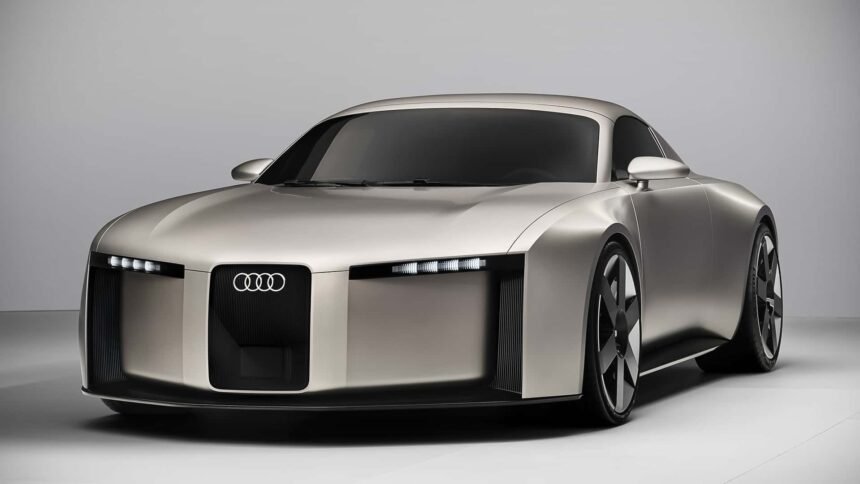
Audi is gearing up to unveil a new sports car that promises to be a game-changer in the world of electric vehicles. Unlike its predecessors, the TT and R8, this new sports car is based on the innovative Concept C. What sets this car apart is its ability to simulate the experience of driving a traditional gasoline-powered vehicle through advanced software features.
According to Audi CEO Gernot Döllner, the inclusion of a virtual gearbox and simulated engine sounds adds a new dimension to the driving experience in an electric car. Döllner shared that he personally feels more connected to the vehicle on a race track when these features are activated, even performing better with a virtual gearbox.
One of the key challenges with electric vehicles is the lack of physical cues that drivers are accustomed to in traditional cars. The fake gear shifts and engine noises incorporated into the new sports car aim to bridge this gap by providing familiar feedback to the driver.
The upcoming production car, derived from the Concept C, is positioned between the TT and R8 in terms of performance and pricing. While specific details are still under wraps, Döllner hinted that the new sports car will deliver a balance between the power outputs of the TT RS and R8 models.
Interestingly, Audi has ruled out the possibility of naming the new sports car as a TT variant. Instead, they are exploring options for a unique name, potentially starting with an “R.” Döllner acknowledged the challenges of finding the perfect name for a vehicle, stating that it can sometimes be more complex than developing the car itself.
The trend of incorporating artificial elements into electric vehicles is gaining traction across the industry. Several automakers, including Lexus, Porsche, and Ferrari, have experimented with simulated gear shifts and engine noises to enhance the driving experience. This approach aims to make EVs more appealing to drivers accustomed to traditional combustion engine vehicles.
However, not all automakers have embraced these artificial features. Dodge’s Charger Daytona EV, for example, focuses on delivering an authentic driving experience without simulated gear shifts. This debate reflects a broader trend of skeuomorphism in the automotive industry, where digital technologies mimic the familiar aspects of traditional vehicles.
As Audi prepares to launch its groundbreaking new sports car, the industry is witnessing a shift towards redefining the driving experience in electric vehicles. The integration of fake gear shifts and engine sounds represents a step towards creating a seamless transition for drivers embracing the future of automotive technology.