

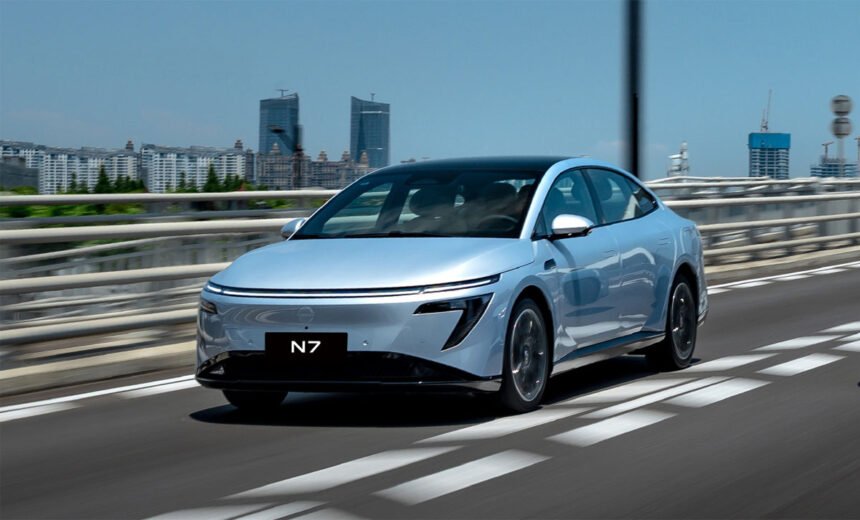
Nissan’s joint venture in China, Dongfeng Nissan, has experienced a significant breakthrough with the launch of the N7 pure electric sedan. The N7 has quickly gained popularity, with 17,215 firm orders received just 35 days after its release. This success marks a major achievement for joint-venture automakers in China, especially considering the challenging market conditions.
The N7 has captured the attention of consumers with its competitive pricing, starting at just RMB 119,900 ($16,650). This price point has surprised many industry experts and is seen as a significant comeback for joint-venture automakers in the Chinese market. The N7 is available in five variants, each offering different features and configurations to cater to a wide range of preferences.
One of the key factors contributing to the N7’s success is its innovative design and advanced technology. Built on Dongfeng Nissan’s Tianyan architecture, the N7 boasts impressive dimensions and a spacious interior. The sedan is equipped with a lithium iron phosphate (LFP) battery pack, offering a range of up to 625 kilometers on certain variants. Additionally, all models support fast charging, allowing for quick and convenient recharging.
The N7 stands out in the market as a front-wheel-drive model, setting it apart from the rear-wheel-drive models that are currently popular among electric vehicles. This unique design, combined with its attractive exterior aesthetics, has resonated well with Chinese consumers. The N7 is the first model developed by a Chinese team and is designed to appeal to a global audience.
In recent years, Chinese domestic brands have gained momentum in the electric vehicle market, while joint-venture brands have faced challenges. The launch of the N7 represents a significant resurgence for Japanese automotive brands in China’s EV market. With its impressive features, competitive pricing, and strong consumer appeal, the N7 has positioned Dongfeng Nissan as a key player in the rapidly evolving electric vehicle industry.
Overall, the success of the N7 reflects the growing demand for electric vehicles in China and highlights the potential for joint-venture automakers to thrive in this dynamic market. As the automotive industry continues to embrace electrification, models like the N7 are paving the way for a new era of sustainable and innovative transportation solutions.