

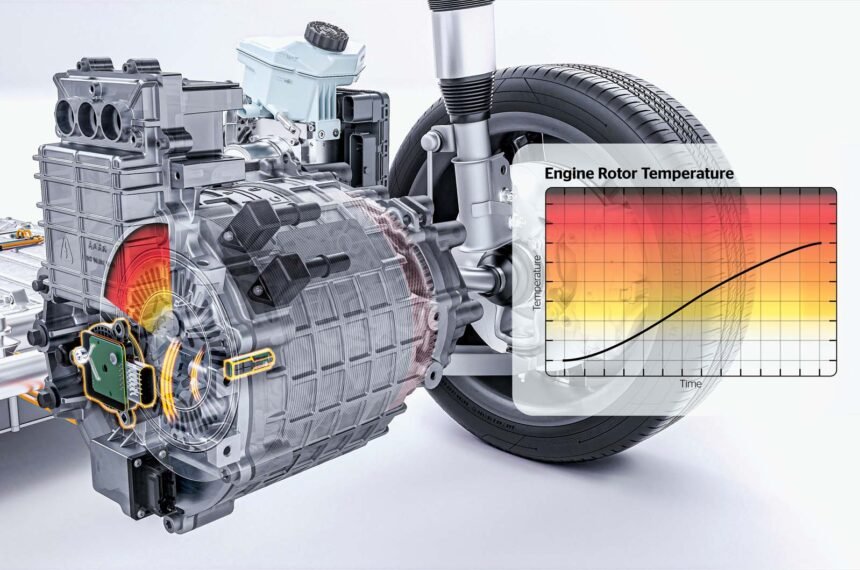
The move from traditional internal combustion engine (ICE) cars to electric vehicles (EVs) represents a shift away from heat engines. However, heat management continues to be crucial in the performance and longevity of electric cars. Continental, a leading automotive technology company, has introduced a groundbreaking device known as an e-Motor Rotor Temperature Sensor (eRTS) to address this issue.
The eRTS is designed to monitor temperature with greater accuracy compared to software-based simulations, resulting in more efficient heat management. This innovative technology is particularly beneficial for permanent magnet synchronous motors, which are commonly used in EVs. These motors contain rare-earth magnets in the rotors, which are essential for achieving high power and efficiency.
While rare-earth magnets offer superior performance, their extraction and processing have significant environmental impacts. Moreover, the current geopolitical landscape has raised concerns about the supply chain of these materials, as a large percentage of them come from China. In response to these challenges, manufacturers are exploring alternatives such as asynchronous magnet-free motors or reducing the reliance on rare-earth materials.
One of the key vulnerabilities of permanent magnets is overheating. If the magnetized material exceeds a certain temperature threshold, known as the Curie point, it can become demagnetized. This can lead to a decrease in motor performance or even motor failure. To prevent this, manufacturers typically use a conservative approach by incorporating a larger amount of rare-earth elements to account for potential overheating.
Traditionally, rotor temperature in EVs has been calculated through algorithms based on sensor readings from the stator. However, this indirect method introduces a margin of error of up to 15 degrees Celsius. To address this limitation, the eRTS offers a more precise measurement with a reduced margin of error of only 3 degrees Celsius. This allows for more efficient use of rare-earth materials while ensuring optimal performance and longevity of the motor.
In addition to its advanced temperature monitoring capabilities, the eRTS is also capable of generating its own power. The device consists of a mote sensor embedded in the rotor, which continuously monitors the temperature of the magnets. This real-time data allows for proactive heat management and protection of the motor from potential demagnetization.
Overall, the introduction of the e-Motor Rotor Temperature Sensor represents a significant advancement in heat management technology for electric vehicles. By enhancing temperature monitoring accuracy and reducing reliance on rare-earth materials, the eRTS is poised to drive innovation in the EV industry and contribute to a more sustainable future.