

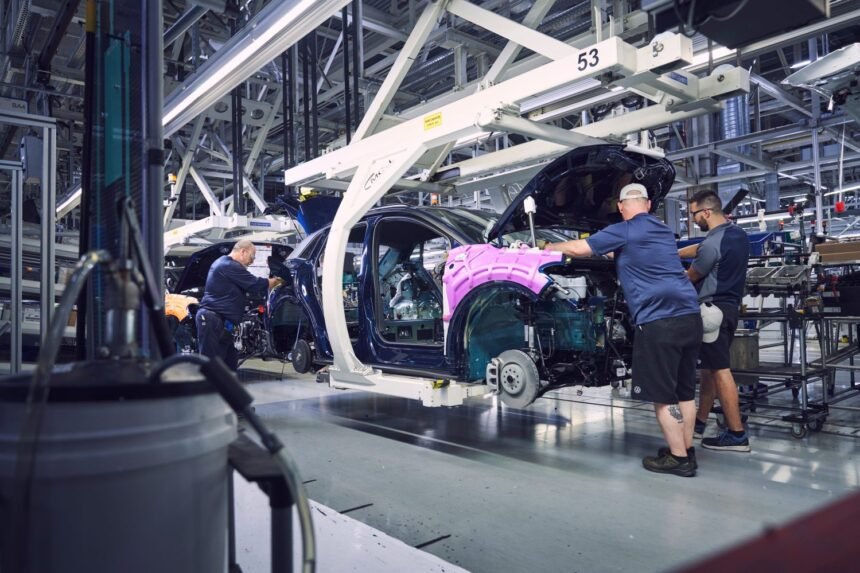
The repeal of the Inflation Reduction Act (IRA) could have devastating effects on the US job market, particularly in the rapidly growing electric vehicle (EV) and battery manufacturing sectors. A recent report from the International Council on Clean Transportation (ICCT) highlights the potential impact of rolling back the IRA on American jobs.
According to the ICCT, since the IRA was enacted in 2022, automakers and battery manufacturers have invested approximately $125 billion in US-based projects, leading to the creation of hundreds of thousands of jobs. The BlueGreen Alliance’s EV Jobs Hub reports an even higher figure of $212.5 billion in announced EV investments.
The ICCT’s latest study, titled “How the Inflation Reduction Act is driving US job growth across the electric vehicle industry,” projects a net creation of over 118,000 new direct jobs in the US EV, battery, and charging industries from 2026 to 2030. However, if key provisions of the IRA are repealed, up to 130,000 direct manufacturing jobs could be lost by 2030, with significant job losses expected in vehicle production, battery manufacturing, and charging infrastructure.
Furthermore, an additional 310,000 indirectly connected jobs could disappear by 2030, affecting various sectors such as mineral processing, retail, and hospitality. States that have become hubs for EV and battery production, such as Michigan, Texas, and Tennessee, are likely to experience the most significant job losses. Michigan could lose nearly 16,000 jobs, while Texas and Tennessee may shed around 13,000 jobs each.
The potential job losses come at a time when US policymakers are considering imposing a new 25% tariff on imported vehicles to incentivize domestic manufacturing. However, the ICCT’s study indicates that the IRA has already spurred a domestic manufacturing boom and job creation.
The report warns that repealing the IRA could have severe consequences for states that have seen significant EV and battery investments. The job losses associated with an IRA repeal would primarily affect the Midwest and southern states, where many of these investments have been announced.
In conclusion, the current administration’s focus on tariffs as a means of promoting domestic manufacturing may have unintended consequences on the EV and battery industry. The IRA tax credits have already proven effective in driving investment and job creation, and rolling back these incentives could have dire implications for the US economy. It is crucial for policymakers to consider the long-term impact of such decisions on American workers and industries.