

Sunday, 17 May 2026
  • Contact
  • Privacy Policy
  • Terms & Conditions
  • DMCA
logo
  • News
  • Brand
    • BYD
    • Nio
    • Xpeng
    • Zeekr
    • Leapmotor
    • Xiaomi
    • Lynk & Co
    • DENZA
    • Wuling
    • GWM
    • ONVO
  • Electric Vehicle
  • Technology
  • Car Reviews
  • Design
  • Manufacturing
  • Tips & Advice
  • 🔥
  • China
  • electric
  • Review
  • Tesla
  • BYD
  • car
  • cars
  • SUV
  • Nio
  • Specs
Font ResizerAa
Ride RadarRide Radar
Search
  • News
  • Brand
    • BYD
    • Nio
    • Xpeng
    • Zeekr
    • Leapmotor
    • Xiaomi
    • Lynk & Co
    • DENZA
    • Wuling
    • GWM
    • ONVO
  • Electric Vehicle
  • Technology
  • Car Reviews
  • Design
  • Manufacturing
  • Tips & Advice
Have an existing account? Sign In
Follow US
© 2024 rideradar.online – All Rights Reserved.
Ride Radar > Blog > Technology > Mobis develops advanced EV battery cooling technology
Technology

Mobis develops advanced EV battery cooling technology

Last updated: December 20, 2024 9:36 am
Share
SHARE

Hyundai Mobis, a key component manufacturing affiliate of Hyundai Motor Group, has recently unveiled a groundbreaking battery cell cooling material designed to prevent electric vehicle (EV) batteries from overheating during ultra-fast charging. This development comes in light of a significant EV battery fire incident in South Korea, which affected over 100 vehicles in an apartment car park back in August.

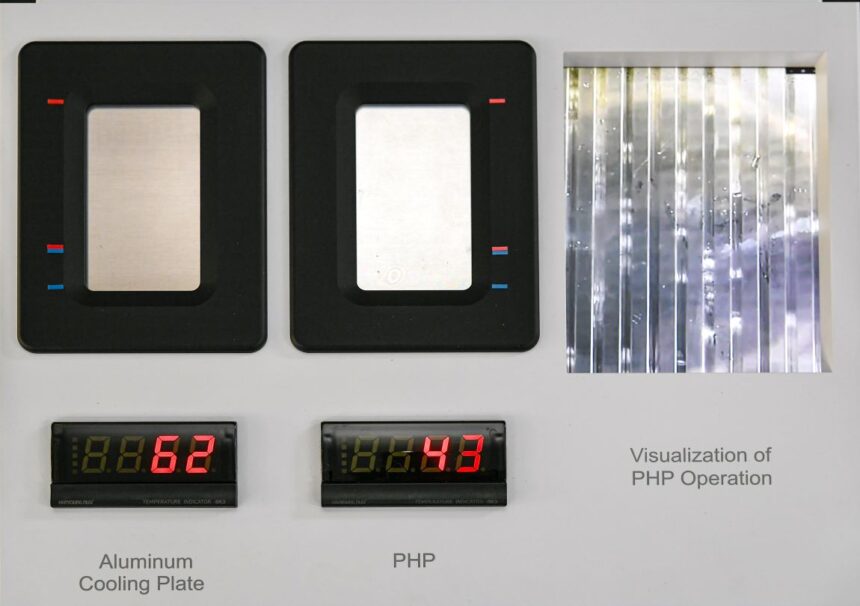
The new cooling material, known as a ‘Pulsating Heat Pipe’ (PHP), is made of aluminum alloy and refrigerant. It is strategically placed between battery cells to effectively reduce the internal battery temperature that tends to spike during rapid charging. Heat pipes, which are metal tube-shaped heat conductors, are renowned for enhancing heat transfer efficiency between two objects. They are commonly utilized for cooling electronic devices such as computer CPUs and smartphones.

Hyundai Mobis’ PHPs utilize vibration to improve internal refrigerant circulation, leading to more efficient heat diffusion and minimal performance degradation even under high-speed vehicle movement. The company claims that its PHPs offer over ten times the heat transfer performance compared to standard aluminum heat pipes, swiftly transferring heat away from overheated battery cells.

Moreover, Hyundai Mobis asserts that its PHPs play a significant role in reducing EV charging times by implementing a more stable thermal management system. The company aims to establish itself as a leader in battery cooling technology and enhance its competitiveness in the future mobility market.

In terms of battery pack design, EVs typically incorporate integrated battery management systems (BMS) that include cooling fans and electronic devices to manage multiple battery modules. The Battery Management Assembly (BMA), which directly generates electrical energy, consists of multiple battery cells stacked together. Optimizing the cooling structure to prevent battery cell overheating is crucial, and Hyundai Mobis has successfully integrated PHPs between each battery cell to ensure efficient heat transfer to cooling blocks, thereby maintaining stable internal temperatures at the module level.

See also  Sorry Apple Fans, Some Automakers Are Turning Their Backs on CarPlay Ultra

This innovative battery cooling technology not only enhances the safety and performance of EV batteries but also contributes to reducing charging times, thus advancing the future of electric mobility. Hyundai Mobis continues to innovate and strengthen its battery safety solutions to meet the evolving needs of the electric vehicle market.


TAGGED:AdvancedbatteryCoolingdevelopsMobisTechnology
Share This Article
Twitter Email Copy Link Print
Previous Article UK car production down 30.1% in November
Next Article Breaking: Volkswagen to cut 35,000 jobs by 2030
Leave a comment

Leave a Reply Cancel reply

Your email address will not be published. Required fields are marked *

- Advertisement -
Ad imageAd image

Popular Posts

CATL, Uxin to co-develop battery swapping solution for used cars

In a recent development, Contemporary Amperex Energy Service Technology Ltd. (CAES), a subsidiary of CATL,…

By Ride Radar

Xiaomi EV warms up for SU7 Ultra production version as unveiling nears

Xiaomi founder Lei Jun has expressed his excitement for the production version of the SU7…

By Ride Radar

2025 Ford Super Duty F-250 Review: Prices, Specs, and Photos

The 2025 Super Duty lineup from Ford offers a wide range of options, from basic…

By Ride Radar

Morgan Plus Six bows out with ÂŁ97k special edition

Morgan to Discontinue Plus Six, Introduce New Flagship Model Morgan has announced that it will…

By Ride Radar

Mercedes-Benz V-Class Review 2025, Price & Specs

The recent cabin update for the V-Class brings about a significant transformation in the interior…

By Ride Radar

Kia access to Tesla Superchargers delayed, had been expected this week

Kia's Supercharger Access Delayed by Weeks or Months Hot on the heels of Kia being…

By Ride Radar

You Might Also Like

Technology

Drivers Still Want Volume Knobs

September 12, 2025
Technology

Chinese Suppliers’ Overseas Layout of Intelligent Driving 2025

September 12, 2025
Manufacturing

Hyundai expects raid to delay US battery plant by three months

September 12, 2025
Technology

AI skills: companies want them, locations try to provide them, but what exactly are they? 

September 12, 2025
logo
Facebook Twitter Youtube

About US

Stay updated on the latest Chinese car models, market trends, and automotive industry news. Get expert insights and real-time updates on China’s evolving auto market.

Top Categories
  • News
  • Car Reviews
  • Electric Vehicle
  • Technology
Usefull Links
  • Contact
  • Privacy Policy
  • Terms & Conditions
  • DMCA

© 2024 rideradar.online –  All Rights Reserved.

Welcome Back!

Sign in to your account

Lost your password?