
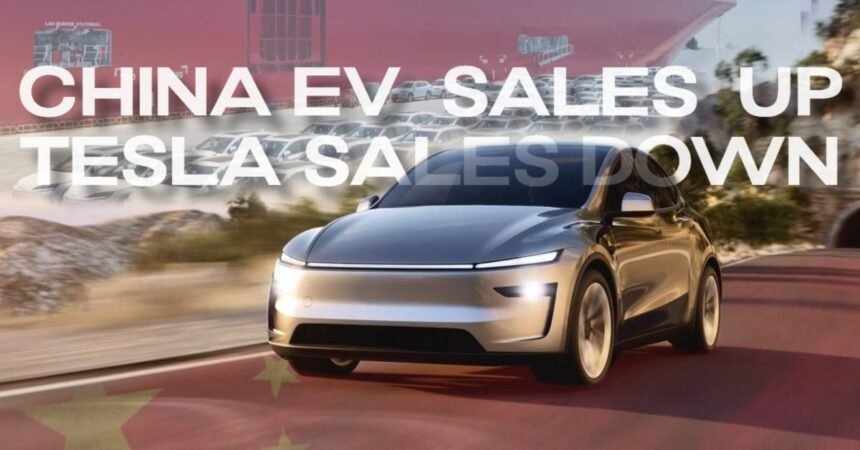
Tesla (TSLA) sales in China are on a downward trend, despite efforts to boost sales with the introduction of the new Model Y, record discounts, and incentives. The competition in the electric vehicle (EV) market in China is heating up, putting pressure on Tesla to perform.
In the first quarter of this year, Tesla experienced a slow period globally, including in China. The company attributed this to the Model Y design changeover, which affected production levels. However, in the second quarter, Tesla was expected to bounce back with pent-up demand for the new version of its best-selling car.
Unfortunately, recent data suggests that Tesla’s performance in China in Q2 is worse than in Q1 and significantly lower compared to the same period last year. New insurance registration data from China revealed that Tesla only sold 8,600 vehicles in the first week of June, falling short of expectations and experiencing a drop from the previous week.
Despite offering higher discounts and incentives compared to the same period last year, Tesla’s sales in China are lagging behind. Retail and export data from May showed that Tesla delivered a total of 61,662 vehicles, which is below the figures from the same period last year. Wholesale deliveries from China have been consistently down each month in 2025.
The decline in Tesla’s sales in China is concerning, especially as the overall electric vehicle market in China is growing. Electric vehicle sales were up by 35% in the first quarter, with the trend continuing into the second quarter. Competition is fierce, with BYD triggering a new EV price war in China, putting further pressure on Tesla.
Tesla’s struggle in China can be attributed to its limited and outdated vehicle lineup, which is being surpassed by competitors in terms of features and pricing. Despite offering discounts and interest-free loans, Tesla’s gross margins on vehicles sold in China are dwindling.
With BYD initiating a price war and new competition like the Xiaomi YU7 entering the market, the second half of the year could prove challenging for Tesla in China. The company needs to rethink its strategy and innovate to stay competitive in the rapidly evolving EV market.