

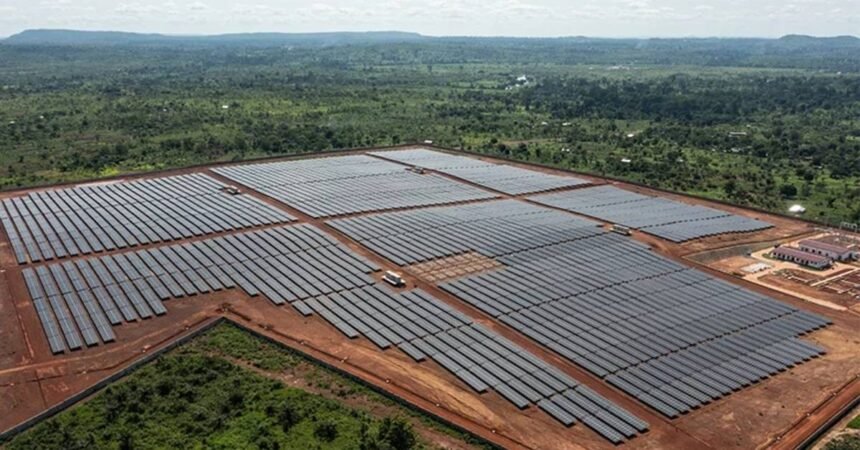
Solar power is gaining momentum in Africa, with a recent analysis showing a significant increase in solar panel imports across the continent. According to data from energy think tank Ember, solar panel imports into Africa surged by 60% in the 12 months leading up to June 2025, setting a new record that could potentially revolutionize electricity systems in many countries.
During this period, Africa imported a total of 15,032 megawatts (MW) of solar panels, a significant increase from the previous year’s 9,379 MW. While South Africa has traditionally been a major player in solar energy, this recent surge in imports is widespread across the continent. A total of 20 countries set new import records, with 25 countries each importing at least 100 MW, compared to just 15 countries the year before.
Nigeria emerged as the second-largest importer, surpassing Egypt, with imports totaling 1,721 MW. Algeria also saw a significant increase, becoming the third-largest importer with 1,199 MW. Several countries experienced staggering growth rates, with Algeria’s imports increasing 33-fold, Zambia’s eightfold, Botswana’s sevenfold, and Sudan’s sixfold. Other countries such as Liberia, the DRC, Benin, Angola, and Ethiopia also more than tripled their imports.
Despite the impressive import numbers, the actual installation of these panels remains uncertain. Muhammad Mustafa Amjad of Renewables First highlighted the importance of proper tracking to avoid losing valuable time and opportunities. He emphasized the need for timely data to ensure an equitable, planned, and inclusive energy transition in Africa.
If these solar panels are indeed installed, the impact could be substantial. In countries like Sierra Leone and Chad, the imports from the past year alone could cover a significant percentage of their electricity generation. Additionally, countries like Liberia, Somalia, Eritrea, Togo, and Benin could see an increase of over 10% in their electricity generation compared to 2023, while 16 countries could experience growth rates exceeding 5%.
The economic benefits of solar energy are also promising. In Nigeria, savings from replacing diesel with solar power could repay the costs of panels in just six months, or even less in other countries. The value of imported refined petroleum in nine of Africa’s top 10 solar panel importing countries outweighed solar imports by significant factors, indicating the potential for cost savings and economic growth.
Ember’s chief analyst, Dave Jones, described the surge in solar panel imports as a pivotal moment and emphasized the need for more research and reporting to ensure that the continent maximizes the potential of solar energy to transform its electricity systems.
Overall, the increasing adoption of solar power in Africa presents a unique opportunity for sustainable energy development and economic growth. By embracing solar energy, African countries can not only reduce their dependence on fossil fuels but also pave the way for a cleaner, more sustainable future for the continent.