

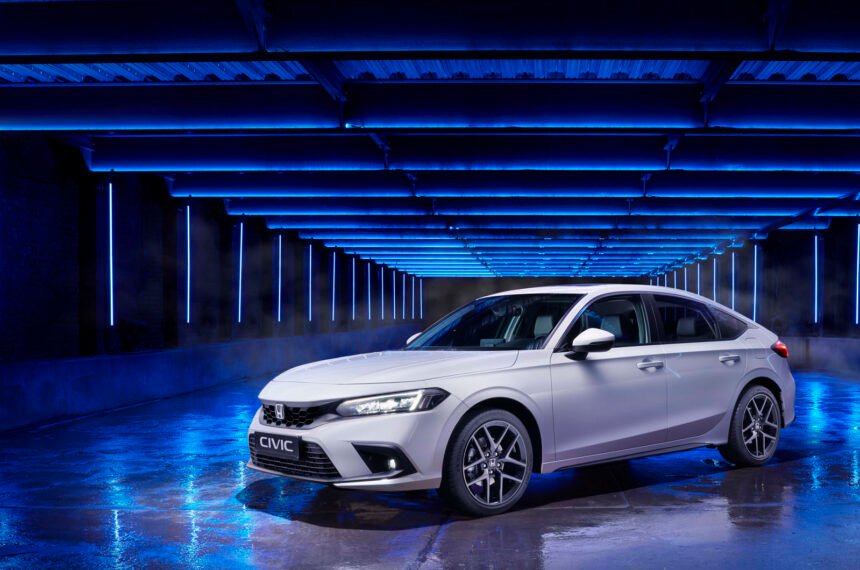
The upcoming launch of two new powertrains by Honda will coincide with the introduction of a new platform that promises significant improvements in driver engagement, comfort, and safety. This new platform, designed for medium-sized cars, will be 90kg lighter than the current structure, with the bodies applied to the frame bringing an additional 10% saving in mass.
In line with cost-cutting measures, Honda’s new models based on this platform will share at least 60% of their parts, such as the engine bay and rear floor. Additionally, the new hybrid powertrains will be 30% cheaper to produce compared to those launched in 2023.
Despite a reduction in planned investment into electric vehicles by £15.4 billion and a £3 billion loss on EVs last year, Honda remains committed to EV development. CEO Toshihiro Mibe expressed the company’s vision of the battery EV business becoming a pillar of their operations from 2030 onwards.
The 0 Series of electric cars, set to be launched in the US next year, signifies a strategic reset of Honda’s approach to the market following setbacks with previous models. The lineup will kick off with a boxy SUV and a futuristic saloon, followed by a seven-seater, small- and medium-sized crossovers, and a saloon aiming to rival the Tesla Model 3.
This new range of electric vehicles represents the future direction of the brand, featuring a radical design language that will not be shared with the hybrid models. However, the new Honda emblem, initially exclusive to the 0 Series, will now be rolled out across the entire lineup.
Toshinobu Minami, head of Honda’s design center, emphasized that while hybrid and combustion models will differ in design, a focus on being dynamic and simple will be key elements across all future models.
Overall, Honda’s upcoming launches promise to deliver innovative technology, enhanced performance, and a fresh design direction that will shape the brand’s identity in the years to come.